
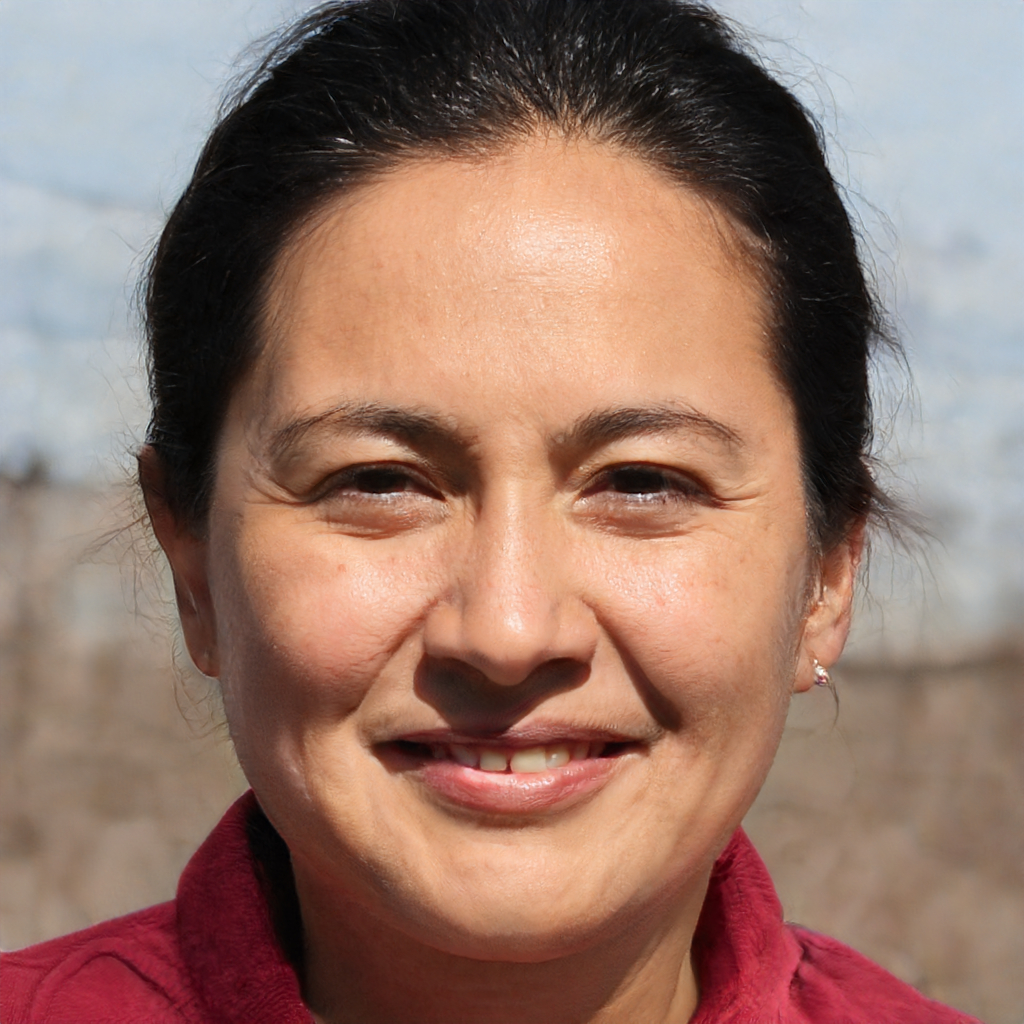
Maribel asked for sugar at 8:08 in the morning, right after Roy’s truck pulled away. I am sixty-nine years old, and people around Birch Street think an old woman with a cane is just part of the scenery, something nice to wave at when they check their mail. They figure we spend our time knitting afghans and forgetting where we put the TV remote. They do not know how much time a widow has to sit by a front window and watch the rhythm of a street.
Roy made everyone in our Kansas cul-de-sac uneasy. He was the kind of man who kept his lawn down to the millimeter and his wife down to a whisper. He mowed at 6:30 on Saturday mornings just to rattle the neighborhood windows, corrected Maribel’s grocery choices right there in the gravel driveway, and never let their little girl, Sofia, go near the church egg hunt unless he stood beside the bounce house with his arms folded tight across his chest. Maribel was thirty-four, maybe thirty-five. She wore long sleeves even in July, and she smiled with only half her mouth like she was afraid the other half might betray her.
I had been widowed eleven years since Harold passed. Harold counted gas mileage for thirteen years before he died, so I knew what a controlled woman sounds like. She always apologizes before asking for air.
The first morning Maribel came over, she held a coffee mug with daisies painted around the rim.
“Do you have sugar?” she asked, her voice shaking just enough to catch on the rough screen door.
I gave her half a cup from the glass jar on the counter.
She said thank you without looking toward my kitchen window. Her eyes stayed glued to the asphalt where the cul-de-sac curved toward the main road. At precisely 8:16, Roy’s white Dodge came back around the corner, slowing down just enough to make sure she was standing right where he left her. Maribel was already back on her porch by then, waving at me with the mug like we had just shared a nice recipe over the fence.
Second day, same thing. Third day, she asked if my phone still worked when the heavy storms knocked the power out.
Fourth day, she handed me the same daisy mug. When I reached out to take it, I felt the bottom. There was no sugar in it at all.
On the ceramic base, scratched into the glaze with something sharp and heavy, were seven characters. KLP-4182. Under that, written in the same jagged, hurried strokes, it said ROUTE 9, BP, 8 MIN.
My hand tightened around the handle until my knuckles turned yellow. Maribel didn’t look at me. She kept her gaze fixed on the empty street where Roy’s exhaust fumes still hung in the heavy morning air.
She whispered, “If I miss tomorrow, call.”
That was the gut-punch. Not a scream. Not a bruise shown like proof in the bright sunlight. Just a schedule, written in the bottom of a coffee mug by a woman who had measured her life in minutes and miles.
I looked down at the scratched letters and tried to swallow the tightness in my throat. I didn’t want to play hero. I was an old woman with bad knees who just wanted to tend her African violets and watch the evening news in peace. But I knew what happened to women who waited too long.
I said, “You want a cup or a bag?”
She kept her voice down low. “Cup.”
So I gave her the cup back with a folded twenty-dollar bill tucked under the rim and my old prepaid flip phone wrapped tight inside a checkered dish towel. It was the emergency phone I kept in the pantry for tornado season, charged and ready.
The real twist came that afternoon. Sofia slipped a library card through my mail slot while I was watering the ferns on the front step. On the back of the card, written in messy purple crayon, was my address and one sentence that made my stomach drop right out of me. Mama says your porch light means yes.
I left my porch light on at 7:02 that night, burning a bright yellow hole in the deepening dusk.
At 8:08 the next morning, Maribel did not come across the asphalt. At 8:09, I laced up my orthopedic walking shoes. At 8:10, Roy’s truck pulled out of the driveway. I saw the same white Dodge, the same dent by the taillight, and the same angry little puff of blue exhaust curling into the damp morning air.
I counted to sixty in my head because panic makes people stupid, and stupid people make mistakes that get other people killed.
Then I walked across the street. My cane tapped a slow, steady rhythm against the concrete, heavy and deliberate.
Maribel opened the front door before my knuckles even touched the wood. She had Sofia’s pink backpack slung over one shoulder and a dented metal cookie tin clutched against her chest like a shield. Inside the tin were her birth certificates, three hundred and sixteen dollars in wrinkled tens and ones, a prescription bottle with her name scraped off with a razor blade, and two crumpled photographs of bruised skin I refused to look at twice. She smelled like cheap lemon soap and cold, absolute fear.
I grabbed her elbow, leaning hard on my cane to keep us both steady, and led her through the side gate over toward Mrs. Alvarez’s empty garage, where my old Buick was already pointed straight down the alley.
I had the plate number. I had the route. I had the eight minutes before Roy figured out she wasn’t on the porch.
Then the kitchen doorknob turned behind us with a sharp click.
Three heavy knocks came from the front door, firm and slow, while Maribel covered Sofia’s mouth with both her hands to stop the little girl from breathing too loud. My heart hammered against my ribs like a trapped bird, and I stepped in front of Maribel, lifting my cane like a club.
The door pushed open before I could swing it, and a large man in a dark uniform stepped into the dim hallway.
“Ma’am?” the sheriff’s deputy asked, looking down at my raised cane with a raised eyebrow. “Are you Elizabeth Miller? I got a frantic call from a VFW pay phone about a vehicle matching KLP-4182 heading toward Route 9.”
I lowered the cane an inch, letting out a breath that felt like glass in my lungs.
“She’s right here,” I said, pointing behind me at the kitchen table where Maribel was finally crying without holding half her mouth back. “And you’re about eight minutes too early to catch him, but his wife has some paperwork for you to sign.”